What Is Film Faced Plywood and What Is It Used For?

Time:2026-10-01 Author:Oliver
0%

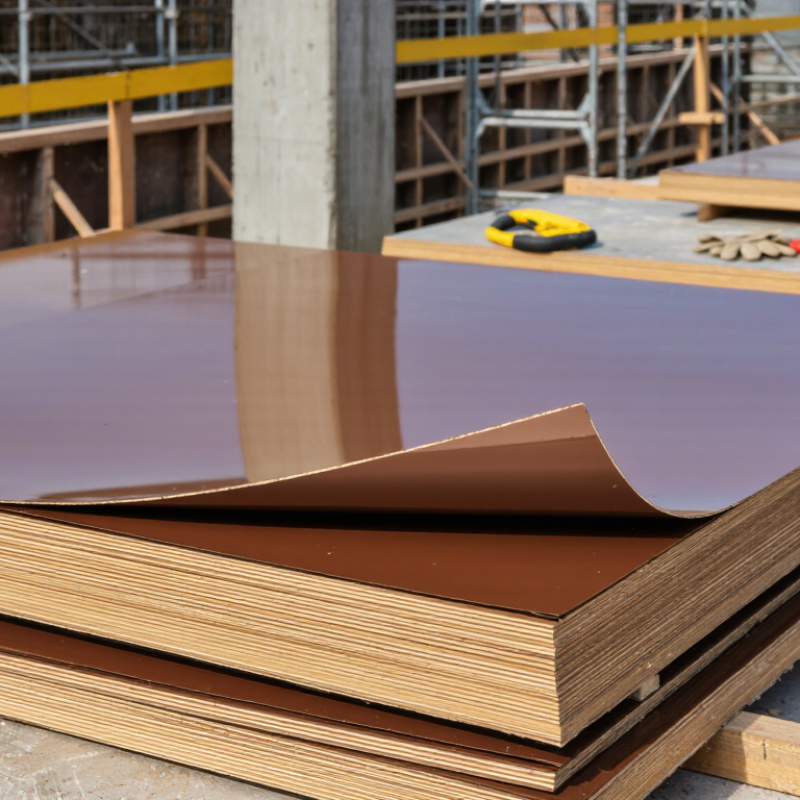
Film Faced Plywood is a durable engineered panel designed for demanding construction and industrial applications. It usually contains layered wood veneers bonded under pressure. A resin-coated film covers both faces, creating a smoother and more water-resistant surface. The dark brown or black coating is familiar on many construction sites. Its main purpose is practical: it helps form clean concrete surfaces while protecting the plywood core. Small details matter. Sealed edges, balanced layers, and consistent thickness can strongly influence service life.

In concrete formwork, workers use Film Faced Plywood for walls, columns, slabs, and foundations. The panel creates a temporary mold that holds wet concrete until it gains enough strength. A good sheet can often be reused, but reuse numbers vary. Cleaning methods, storage conditions, cutting, and site handling all affect performance. A panel left in standing water may fail sooner than expected. Contractors also use this plywood for vehicle floors, industrial platforms, storage boxes, and other applications requiring a hard, washable surface.

Choosing the right product requires more than checking thickness or appearance. Buyers should review veneer quality, film weight, core bonding, edge sealing, and declared load performance. Reliable suppliers can provide technical data and production information. Still, no panel suits every project. Some products resist moisture well but may not tolerate constant outdoor exposure. Others look smooth but have weak cores. This article explains what Film Faced Plywood is, how it is made, where it is used, and what practical limitations should be considered before purchase. The material is useful, not magical. Good results depend on correct selection, careful installation, and honest evaluation after each use.
What Is Film Faced Plywood and What Is It Used For?

What Is Film Faced Plywood?

Film faced plywood is an engineered wood panel with a smooth, resin-coated surface. Its core contains several thin wood veneers, bonded in alternating directions for greater stability. The outer film usually contains phenolic resin, which helps resist moisture, abrasion, and concrete adhesion. This coating also creates a cleaner finish than ordinary plywood. The edges are commonly sealed to reduce water entry. It is not completely waterproof.

In construction, workers often use film faced plywood for concrete formwork, where panels shape fresh concrete and support repeated pours. The smooth face can leave a more even concrete surface, reducing some finishing work. It is also used for flooring, vehicle interiors, storage platforms, and temporary site structures. Performance depends on core quality, film thickness, edge protection, and careful handling. Keep it flat and dry.

Small mistakes matter.

From practical use, damaged edges cause problems faster than expected. Cutting, drilling, or dragging panels can expose the inner veneers. Once moisture enters, swelling and delamination may follow. A durable panel still needs proper cleaning and storage. Reuse is possible, but the number of cycles varies widely. Treating every film faced plywood panel as identical would be misleading. Suppliers should provide technical data, including thickness tolerance, bonding grade, surface weight, and recommended applications. These details help buyers choose panels for real site conditions rather than appearance alone.

How Is Film Faced Plywood Manufactured?

Film faced plywood is an engineered wood panel with a smooth, water-resistant film on its surfaces. It is commonly used for concrete formwork, flooring, wall protection, and temporary construction structures. Its performance depends heavily on how the panel is manufactured.

Production begins with logs selected for suitable density and straightness. A rotary lathe peels the logs into thin veneers. These veneers are dried under controlled heat until their moisture content reaches a suitable range. Excess moisture may weaken bonding. Over-drying can also make the wood brittle. Each sheet is then inspected and graded for cracks, knots, and thickness variation.

The veneers are arranged in alternating directions. This cross-lamination improves strength and reduces dimensional movement. Adhesive is applied between the layers, often a moisture-resistant resin designed for hot pressing. The stacked panel enters a heated press, where pressure and temperature cure the adhesive and create a stable board. After pressing, the edges are trimmed, and the surfaces are calibrated. A resin-impregnated film is then bonded to both faces under heat and pressure. The film forms a dense barrier against water, concrete adhesion, and surface wear.

Manufacturing is controlled, not flawless. Small core gaps or uneven edges can still appear. Reliable producers test thickness, bonding strength, moisture resistance, and surface quality before shipment. In practice, careful storage and clean handling remain important. Even a well-made panel can swell when its cut edges stay exposed to standing water.

Film-Faced Plywood: Common Nominal Thicknesses

Film-faced plywood is made by bonding thin wood veneers with waterproof adhesive, pressing them into panels, and applying a resin-coated film to the surface. Common nominal thicknesses range from 9 to 30 mm. Thicker panels generally provide greater stiffness for concrete formwork, slabs, walls, columns, scaffolding platforms, and other temporary construction structures.

What Are Its Main Properties and Benefits?

Film-faced plywood combines layered wood veneers with a resin-coated paper film. The film creates a smooth, dense surface that resists moisture, abrasion, and concrete adhesion. It is not permanently waterproof. Water can still enter through exposed edges, drilled holes, or damaged areas. Careful sealing matters.

Its main strength is repeated performance in concrete formwork. A clean panel can produce a more even concrete finish, reducing surface repairs and labor. The plywood also offers good load-bearing capacity when its thickness and support spacing are correctly selected. Its smooth face helps concrete release, while the sealed coating limits cement paste absorption. In some projects, panels can be reused several times.

Handling details affect service life. Workers should lift sheets instead of dragging them across rough ground. Cutting should be followed by edge protection, especially in wet conditions. I have seen otherwise sound panels fail early because their edges were left open. That was avoidable.

Film-faced plywood is also used for temporary floors, vehicle platforms, wall protection, and industrial crates. Its textured or smooth surface can improve grip, depending on the film design. However, quality is not identical across all products. Weak cores, gaps between veneers, or uneven films reduce reliability. Buyers should check thickness, bonding quality, surface damage, and intended load conditions before use. Mistakes happen when appearance is judged more carefully than internal construction.

Where Is Film Faced Plywood Commonly Used?

Film faced plywood is widely used where concrete needs a smooth, stable mold. Its surface has a resin-coated film, while layered wood veneers provide strength and dimensional stability. The USDA Forest Products Laboratory explains that cross-laminated veneers improve plywood’s resistance to splitting and directional weakness. However, coating quality and edge sealing still matter greatly.

Concrete formwork remains its main workplace. Contractors use it for walls, columns, beams, floor slabs, foundations, and bridge decks. On site, a panel may face wet concrete, vibration, sunlight, and repeated stripping. Good panels release cleanly, leaving fewer surface marks. They also reduce preparation time. Not always.

The U.S. Census Bureau reported approximately 1.5 trillion dollars in U.S. construction spending during 2023. That figure does not measure plywood use directly, but it shows the scale of work requiring temporary form systems. Film faced plywood also appears in precast yards, tunnel projects, retaining walls, and large infrastructure foundations. Reuse depends on thickness, storage, cutting, and cleaning. A panel used eight times on one project may fail earlier on another. Water can enter damaged edges. Nails can distort the face. Crews should inspect swelling, delamination, and surface wear before every pour. The practical choice is not simply the cheapest sheet; it is the panel that matches concrete pressure, support spacing, and the planned reuse cycle.

How Should Film Faced Plywood Be Selected and Maintained?

Selecting film faced plywood requires more than checking its thickness. Match the panel to the concrete pressure, support spacing, and expected number of uses. A thicker sheet may resist bending, but it is not automatically the best choice. Inspect the core for gaps, loose patches, and uneven edges. The surface should feel smooth and firmly bonded. Small bubbles or damaged coatings can leave visible marks on concrete.

Water resistance matters, but waterproof does not mean maintenance-free. Store panels flat, raised above the ground, and protected from direct rain. Keep the edges covered during transport. After stripping, remove concrete residue with a plastic scraper. Avoid metal tools and aggressive grinding. They can scar the film and expose the wood layers. Seal cut edges with a suitable edge coating before reuse. This small step is often missed.

Clean release-agent application also affects panel life. Too much agent can stain concrete and attract dust. Too little may cause difficult stripping. Follow the product instructions and test a small area first. On busy sites, workers sometimes stack wet panels face to face. That traps moisture and encourages swelling. Let both surfaces dry before stacking. A practical inspection should happen after every pour, not only when damage becomes obvious. No panel lasts forever. Reusing a visibly swollen sheet may save money today, but it can create costly surface repairs later.

FAQS

What is film faced plywood used for?

It is used for concrete formwork, flooring, wall protection, and temporary construction structures.

How is film faced plywood manufactured?

Logs are peeled into veneers, dried, inspected, cross-laminated, glued, and hot-pressed into stable panels. A smooth resin film is then bonded to both faces.

Why are the veneers arranged in alternating directions?

Cross-lamination improves strength and limits swelling or shrinking across the panel. It reduces movement.

How should I check a panel before buying it?

Check thickness, core gaps, loose patches, uneven edges, bubbles, and coating damage. The surface should feel smooth and firmly bonded.

Does film faced plywood remain waterproof forever?

No. Its film resists water, but exposed cut edges can absorb standing water. Waterproof is not maintenance-free.

How should the panels be stored?

Store them flat, raised above the ground, and protected from direct rain. Keep the edges covered during transport. Dry storage matters.

How can I clean panels after concrete removal?

Remove residue with a plastic scraper. Avoid metal tools and aggressive grinding. They can scratch the film and expose wood layers.

How can I extend panel life after cutting?

Seal every cut edge with a suitable edge coating before reuse. This small step is often forgotten.

How should release agent be applied?

Apply a clean, even amount according to the instructions. Too much may stain concrete. Too little can make stripping difficult. Test a small area first.

When should damaged plywood be replaced?

Inspect it after every concrete pour. Replace visibly swollen panels instead of reusing them blindly. Saving money today may cause costly surface repairs later.

Conclusion

Film Faced Plywood is an engineered wood panel covered with a durable resin-coated film on one or both sides. It is manufactured by bonding several layers of wood veneer under heat and pressure, then applying the protective film to create a smooth, moisture-resistant surface. This structure gives the material excellent strength, dimensional stability, wear resistance, and a cleaner concrete finish compared with ordinary plywood. It can also be reused when handled properly.

Film Faced Plywood is widely used for concrete formwork, floor and wall panels, temporary structures, transport platforms, and other construction applications where reliable performance is required. When selecting it, users should consider thickness, veneer quality, surface type, load requirements, edge sealing, and the expected number of uses. Proper maintenance includes protecting the edges from water, cleaning the surface after use, avoiding unnecessary impact, storing panels flat in a dry, ventilated location, and repairing minor damage promptly.


Oliver

Oliver

Oliver is a seasoned marketing professional with a wealth of expertise in driving brand awareness and engagement. With a deep understanding of our company's product offerings, he consistently delivers high-quality content that enriches our professional blog. His insights not only shed light on......