10 Tips for Choosing the Best Concrete Plywood?

Time:2026-09-11 Author:Ethan
0%

Choosing the best Concrete Plywood is not simply a matter of selecting the thickest panel. The right choice affects concrete appearance, form stability, labor time, and panel reuse. A smooth wall pour may depend on small details, such as sealed edges, uniform thickness, and a clean release surface.

Robert L. Peurifoy, a respected construction engineer and formwork author, wrote, “The quality of the concrete surface is largely determined by the quality of the form.” This principle still matters on modern job sites. Concrete Plywood must resist moisture, pressure, abrasion, and repeated handling. Its overlay, core construction, bonding quality, and permitted reuse count should match the project conditions.

There is no perfect panel for every pour. That is easy to forget. A high-density overlay may produce a sharper finish, but it can cost more and require careful storage. A cheaper panel may appear practical until swollen edges damage a finished surface. Weather changes the decision too. Rain, freezing temperatures, and long pour cycles can expose weak bonding or poor edge sealing.

This guide explains ten practical tips for comparing Concrete Plywood. It considers thickness, surface quality, resin bonding, durability, safety, supplier documentation, and actual job-site performance. Check the technical data sheet. Inspect the edges. Ask how many reuse cycles are realistic. A thoughtful choice usually begins with project conditions, not a catalog photograph.
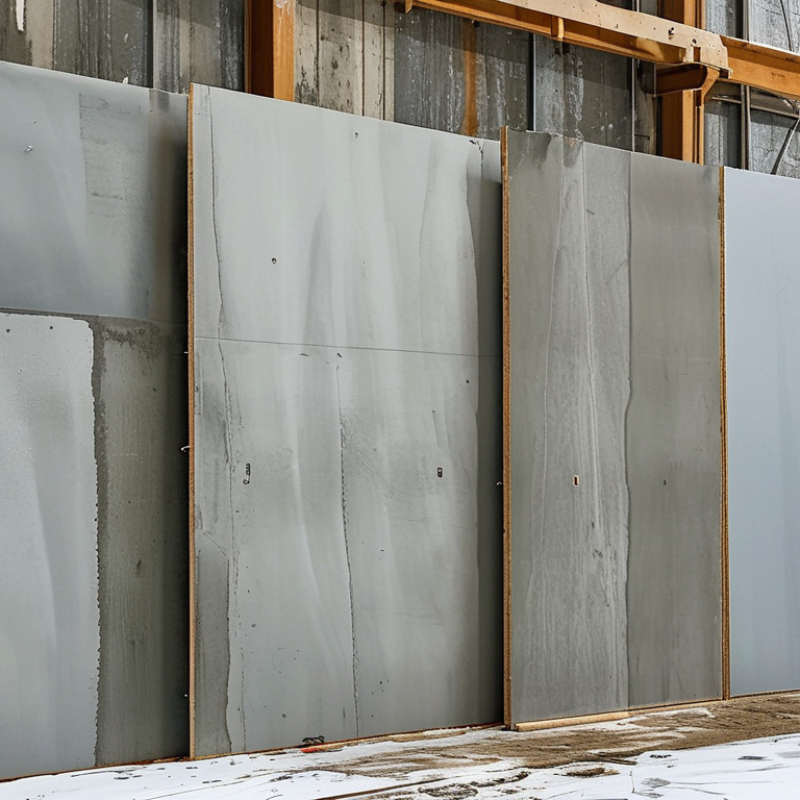
10 Tips for Choosing the Best Concrete Plywood?

Define Concrete Plywood and Its Main Construction Uses

Concrete plywood is an engineered veneer panel designed to create smooth, stable molds for fresh concrete. Its layers are bonded with water-resistant adhesive, while the face may include a resin-treated overlay. Unlike ordinary sheathing, it must resist moisture, abrasion, pressure, and repeated stripping.

Its main construction use is formwork. Crews cut panels for wall molds, slab edges, columns, beams, staircases, and foundation footings. The USDA Forest Products Laboratory’s Wood Handbook identifies plywood as a structural panel with strong stiffness-to-weight performance. That balance helps workers build large forms without excessive handling effort. A 1,220 × 2,440 millimeter panel is common on many sites. Measure twice.

Concrete pressure matters more than appearance. ACI 347R explains that fresh concrete pressure depends on placement rate, temperature, slump, vibration, and setting time. Rapid placement can create near-hydrostatic pressure, especially in tall wall forms. Therefore, plywood selection cannot stand alone; studs, walers, ties, and supports must work as one system. The American Concrete Institute also stresses checking formwork strength, serviceability, and stability before placement. In practice, a coated panel may produce a cleaner surface, but reuse estimates are never guaranteed. Dust, damaged edges, poor release practices, and careless stripping reduce performance quickly. OECD-FAO agricultural outlook data also show continuing global demand for wood-based panels, reinforcing plywood’s importance in construction supply chains.

Assess Plywood Grades, Strength, and Structural Performance

10 Tips for Choosing the Best Concrete Plywood

Assess Plywood Grades, Strength, and Structural Performance

Concrete plywood must carry wet concrete, workers, vibration, and repeated stripping. Grade matters more than a smooth surface. Structural plywood marked for exterior or suitable exposure conditions is safer than interior-rated material. PS 1-22 separates veneer quality, bond classification, and panel performance. These details affect durability under moisture.

The U.S. Forest Products Laboratory’s Wood Handbook, FPL-GTR-282, reports plywood modulus of elasticity values commonly ranging from about 1.0 to 2.0 million psi. Values vary with species, thickness, veneer direction, and layup. Higher stiffness reduces visible deflection between supports. Check the panel’s span rating, not only its thickness. A thicker sheet can still perform poorly if its core contains weak gaps.

Fresh normalweight concrete weighs roughly 145–150 pounds per cubic foot. ACI 347R explains that form pressure also changes with placement rate, temperature, slump, and vibration. Fast pours create severe loading. Pay attention to edges. Delaminated plies, open knots, and crushed corners often become failure points. A dry panel may look strong, yet moisture can weaken its bond line. That mistake is easy to make. Measure actual support spacing, calculate expected pressure, and compare bending, shear, and deflection values from the manufacturer’s technical sheet. Field conditions are rarely perfect. Reuse also deserves caution; release agents, nail holes, and scraping gradually reduce structural reliability.

10 Tips for Choosing the Best Concrete Plywood? - Assess Plywood Grades, Strength, and Structural Performance

Tip What to Assess Practical Benchmark or Fact Why It Matters for Concrete Forms Selection Action
1. Confirm the plywood standard Panel standard, structural classification, and intended use Look for documentation showing compliance with a recognized structural plywood standard, such as PS 1 or an applicable EN standard. A recognized standard establishes requirements for veneer quality, bonding, dimensions, and performance. Request the product datasheet and conformity documentation before purchase.
2. Choose the correct grade Face and back veneer grades, core quality, and allowable defects Higher face grades generally provide a smoother surface; structural grades may permit repaired knots or limited voids according to the governing standard. Surface quality affects concrete finish, while core integrity affects load transfer and panel durability. Use a smooth face for exposed architectural concrete and a structural grade for ordinary forming work.
3. Select adequate thickness Panel thickness, support spacing, and expected fresh-concrete pressure Common formwork plywood thicknesses include approximately 12, 15, 18, and 21 mm; thicker panels usually permit wider support spacing. Bending stiffness rises strongly with thickness, reducing deflection between joists or walers. Select thickness from an engineered formwork design rather than from thickness alone.
4. Verify bond durability Adhesive type and resistance to moisture, heat, and repeated wetting Exterior or weather-resistant bonding is preferred for concrete forms because panels contact wet concrete and may be cleaned repeatedly. Weak bonding can cause delamination, edge swelling, and sudden loss of structural capacity. Check for a documented exterior or equivalent durable bond; do not rely only on appearance.
5. Compare bending strength Bending modulus of rupture and allowable design stress Strength values depend on species, veneer direction, grade, moisture, and test method; compare values only when the test basis is the same. Adequate bending strength helps the panel resist cracking or failure under fresh-concrete pressure. Use manufacturer or standard design values in structural calculations, not generic internet averages.
6. Check stiffness and deflection Modulus of elasticity, span, support spacing, and permissible deflection A panel can have sufficient strength but still deflect excessively; design checks should consider both bending stress and serviceability. Excessive deflection produces bulges, inaccurate dimensions, and uneven concrete surfaces. Reduce support spacing or increase thickness when the required deflection limit is not met.
7. Inspect veneer construction Number of plies, cross-banding, core gaps, overlaps, and open splits Cross-laminated veneers improve dimensional stability; visible core voids, loose knots, and open splits can reduce local capacity. Defects interrupt load paths and may create print-through or leakage points in the form face. Reject panels with delamination, open core voids, severe edge damage, or warped faces.
8. Evaluate surface treatment Film, coating, sanding quality, water absorption, and release-agent compatibility A smooth, sealed surface generally gives cleaner stripping and can reduce concrete paste penetration into the wood. The face finish influences concrete appearance, cleaning time, and the number of usable reuses. Match the surface finish to the required concrete appearance and use only a compatible release agent.
9. Account for moisture and dimensions Moisture content, thickness tolerance, flatness, and edge sealing Wood-based panels change dimensions with moisture; sealed edges help limit water uptake but do not eliminate movement. Swelling or warping can change wall alignment, joint tightness, and finished concrete dimensions. Store panels flat, off the ground, protected from weather, and acclimatized before installation.
10. Plan reuse and safe handling Expected reuse cycles, cleaning method, fastener layout, and inspection procedure Reuse is not a fixed rating; it depends on coating, concrete mix, release agent, stripping practice, storage, and damage. Proper handling preserves the face, maintains panel stiffness, and reduces formwork replacement. Inspect every panel before reuse and remove any panel with structural damage or significant delamination.

Note: Actual load capacity, allowable span, and reuse performance must be verified using the plywood supplier’s technical data and the applicable formwork design standard.

Compare Surface Treatments, Core Types, and Water Resistance

Concrete plywood must match the job, not just the price. In practice, I inspect the panel edge, face, and core before ordering.

Tip 1: Check the surface treatment for a smooth, sealed face.

Tip 2: Look for consistent film coverage without blisters or exposed wood.

Tip 3: Choose a textured surface when workers need better grip.

Tip 4: Confirm the finish will release concrete cleanly.

The core controls strength, stability, and repeated use. Tip 5: Select a dense hardwood core for demanding formwork. Tip 6: Use a balanced multi-layer core to reduce bending. Tip 7: Examine the edges for gaps, overlaps, or weak repairs. Tip 8: Tap several areas; hollow sounds may indicate internal separation.

A small flaw matters. I once trusted a visually clean panel that warped after one wet cycle. That mistake changed my inspection routine.

Water resistance needs careful comparison. Tip 9: Ask whether the adhesive resists repeated wetting, not only brief splashes. Tip 10: Check thickness tolerance, moisture content, and storage guidance. Panels stored directly on concrete can absorb moisture through their edges. Keep them raised, covered, and ventilated. Also, compare performance after several pours, not after one successful use. Manufacturer data is useful, but field conditions can be harsher. Seal cut edges when permitted, and record any swelling after removal. That record often reveals more than a brochure.

Match Panel Thickness and Dimensions to Project Requirements

Choosing concrete plywood starts with the load, not the sheet label. A panel that looks sturdy may deflect under wet concrete pressure. Measure the support spacing, pour height, vibration, and expected reuse. Thicker panels usually resist bending better, but thickness alone cannot fix weak framing. For many wall forms, 18 mm plywood is a practical reference point, yet the engineer’s span calculation should control. Short spans may accept thinner panels. Long spans need more stiffness.

Match panel dimensions to the form layout. Fewer joints mean fewer leak paths and less cutting around corners. A 1200 x 2400 mm sheet can cover a broad wall face, while smaller panels may suit columns or narrow footings. Keep every panel edge fully supported, especially near tie holes and construction joints. Check the actual finished size, because nominal dimensions can change slightly after sanding or repeated use. Deflection is unforgiving.

During inspection, look for swollen edges, open plies, and bowing. Replace questionable sheets before the pour. Small defects can become visible lines in the concrete. A practical mistake is choosing the largest panel for speed. It may become heavy, awkward, and difficult to brace safely. I have learned that handling time matters as much as coverage. Confirm dimensions against form drawings, site access, lifting limits, and local structural requirements. Record the selected thickness and support spacing to reduce guesswork later.

10 Tips for Choosing the Best Concrete Plywood: Match Panel Thickness and Dimensions to Project Requirements

Typical nominal plywood thicknesses for common concrete formwork applications

Thinner 12 mm panels are generally suited to light-duty, closely supported work, while 15–18 mm panels are commonly selected for walls, footings, columns, and repeated pours. The 21 mm option may be appropriate where higher stiffness or wider support spacing is required. A frequently available sheet size is 1220 × 2440 mm (4 × 8 ft); final thickness, dimensions, support spacing, and reuse expectations should be confirmed by the project engineer.

Verify Quality Standards, Sustainability, and Supplier Reliability

10 Tips for Choosing the Best Concrete Plywood

Quality begins with documented performance, not a smooth face. Ask for thickness tolerance, bonding class, surface treatment, and test results. For repeated formwork, check EN 636 and EN 314-2 classifications, or the equivalent local standard. Confirm resistance to moisture, pressure, and alkaline concrete contact. Tip 1: Inspect the edges. Open glue lines often reveal weak pressing. Tip 2: Request batch-level certificates, not generic brochures. Laboratory reports should identify the panel thickness and production date.

Sustainability also needs evidence. The FAO’s Global Forest Products Facts and Figures 2023 reported about 3.9 billion cubic metres of global roundwood production in 2023. That scale makes responsible sourcing important. Look for legal timber documentation, credible chain-of-custody certification, and an Environmental Product Declaration when available. The 2023 UNEP Global Status Report links buildings and construction to 37% of global energy-related emissions. Reusable plywood can reduce replacement waste, although reuse claims need site records. Tip 3: Compare expected reuses, not only purchase prices. Tip 4: Check whether coatings complicate recycling.

Supplier reliability is practical, not theoretical. Ask about lead times, storage conditions, replacement procedures, and technical support. A supplier should explain defects clearly. Test a small shipment first. I learned this the hard way. A panel can meet a standard yet perform poorly after careless storage. Tip 5: Record moisture readings on delivery. Tip 6: Keep samples from every batch for later comparison. Tiny details matter. Reliable documentation protects both safety and project cost.

FAQS

: What plywood grade is suitable for concrete formwork?

: Choose structural plywood rated for exterior or suitable exposure conditions. Interior-rated sheets may weaken under repeated moisture. Check the documented bond classification. A smooth face alone proves little.

Why does plywood stiffness matter?

Stiffer plywood deflects less between supports. Common modulus values range from about 1.0 to 2.0 million psi. Actual performance depends on species, thickness, veneer direction, and layup. Check the span rating. Do not guess.

How much pressure can fresh concrete create?

Normalweight concrete weighs about 145–150 pounds per cubic foot. Form pressure also depends on placement speed, temperature, slump, and vibration. Fast pours can create severe loading. Measure support spacing before selection.

What defects should I inspect?

Examine edges, faces, and exposed core areas. Avoid delaminated plies, open knots, crushed corners, and open glue lines. Tap several locations. Hollow sounds may indicate internal separation. Edges reveal trouble.

Which core construction is preferable?

A dense hardwood core suits demanding formwork. A balanced multi-layer core can reduce bending and improve stability. Look for gaps, overlaps, and weak repairs. A small flaw matters.

Does a sealed surface guarantee good performance?

No. Check for consistent film coverage, blisters, and exposed wood. A textured face may improve worker grip. The finish should release concrete cleanly. A clean face can mislead.

How can plywood resist repeated wetting?

Ask whether the adhesive withstands repeated wetting, not only brief splashes. Check thickness tolerance and moisture content. Store panels raised, covered, and ventilated. Never place them directly on concrete.

How should reused plywood be evaluated?

Compare performance after several pours, not one successful use. Inspect nail holes, scraped areas, swelling, and warped edges. Record damage after removal. I once trusted a clean panel that warped after one wet cycle. That changed my inspection routine.

What documentation should a supplier provide?

Request batch-level certificates, production dates, thickness data, bonding classification, and test results. Confirm moisture resistance and alkaline-contact performance. Keep samples from each batch. Tiny details matter.

How should sustainability claims be checked?

Look for legal timber records, credible chain-of-custody evidence, and environmental product information when available. Compare expected reuses with replacement waste. Coatings may complicate recycling. Reuse claims need site records.

Conclusion

Choosing the right Concrete Plywood is essential for achieving reliable results in formwork, foundations, columns, slabs, and other construction applications. Start by understanding its intended use and selecting a grade that provides sufficient strength, stiffness, and dimensional stability for the expected loads. Consider the panel’s surface treatment, core structure, and resistance to moisture, since these factors influence concrete finish quality, durability, and the number of times the panels can be reused. A smooth, durable coating may reduce concrete adhesion and simplify cleaning after removal.

Panel thickness and dimensions should match the project’s span, support spacing, handling requirements, and overall design. Before purchasing, verify quality certifications, production consistency, sustainability practices, and formal testing information. It is also important to evaluate supplier reliability, including technical support, delivery capacity, packaging, and quality control. By balancing performance, durability, environmental considerations, and total cost, contractors can select Concrete Plywood that supports safer construction and more efficient project completion.


Ethan

Ethan

Ethan is a seasoned marketing professional with a deep expertise in our company's innovative product line. With a passion for sharing knowledge and insights, he takes the lead in regularly updating our corporate blog, where he explores industry trends, product features, and effective marketing......