How to Choose the Best Waterproof Plywood for Your Project?

Time:2026-09-21 Author:Sienna
0%

Choosing the right Waterproof Plywood can determine whether a project stays strong after years of moisture exposure. Kitchen cabinets, bathroom walls, boat interiors, and outdoor furniture all face different risks. A panel that performs well under a covered porch may fail beside a pool.

The word “waterproof” needs careful attention. Most plywood is water-resistant rather than permanently waterproof. Reliable products usually use moisture-resistant adhesives, durable veneers, and well-sealed edges. Look for clear grading information, manufacturer test data, and recognized standards such as EN 314 or equivalent requirements. Check the core carefully. Gaps, overlapping veneers, and rough edges can allow water to enter.

Experienced builders also consider thickness, face quality, bending strength, and installation conditions. A 12-millimeter panel may suit a cabinet side, while flooring or structural work may require a thicker sheet. Seal every cut edge. Use suitable fasteners. Leave enough space for expansion.

Small details matter.

I have seen projects fail because buyers focused only on the label. The cheapest sheet often needed extra sealing and replacement sooner. That does not make every premium panel necessary, either. Some projects simply do not justify marine-grade plywood. Compare the exposure level, support spacing, surface finish, and maintenance demands before deciding. A practical choice balances performance, budget, and risk. Recheck the supplier’s technical information before purchase, because product names and performance claims can vary between markets.
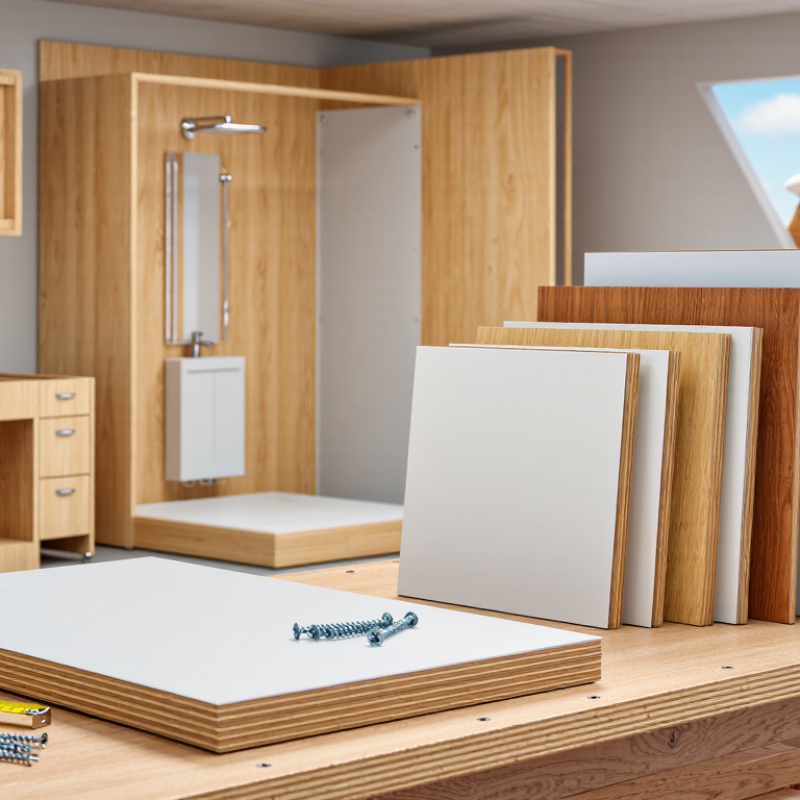
How to Choose the Best Waterproof Plywood for Your Project?

Define Waterproof Plywood and Its Core Performance Standards

Waterproof plywood is not completely immune to water. The term usually describes plywood with durable bonding and improved resistance to moisture. Its core performance depends more on adhesive integrity than on a glossy surface. Under EN 314-2, Class 3 bonding is designed for severe exterior conditions. EN 636 Class 3 plywood is intended for outdoor exposure, including repeated wetting and drying.

Moisture still changes wood. The USDA Forest Products Laboratory’s Wood Handbook, FPL-GTR-282 (2021), identifies wood as hygroscopic and notes that swelling begins below the fiber-saturation range, commonly near 30% moisture content. Plywood can therefore expand at edges, joints, and fastener holes. Edge sealing matters. So does drainage.

Look beyond the label. Check the declared EN 314 bonding class, veneer quality, core gaps, thickness tolerance, and delamination test results. ASTM D1037 provides widely used methods for evaluating wood-based panel properties, including water absorption and thickness swelling. However, no single absorption percentage proves that plywood is waterproof. That assumption causes expensive failures.

A dark face veneer can hide weak inner plies. I have seen panels pass a quick splash test, then separate after several wet-dry cycles. For a bathroom wall, trailer floor, or exposed cabinet, specify exterior-grade plywood and protect every cut edge. The right sheet is not merely water-resistant; it must retain strength after moisture cycling.

Match Plywood Grades to Your Project’s Location and Purpose

Choosing waterproof plywood starts with the project’s location, not the label on the sheet. A covered balcony needs different protection from a boat deck or an outdoor staircase. Check the bonding grade, face quality, thickness, and intended exposure before buying.

For indoor areas with occasional moisture, Exposure 1 plywood may be suitable. It handles construction humidity but should not face constant rain. Exterior-grade plywood uses stronger weather-resistant adhesive for outdoor walls, roof edges, and garden structures. Still, exposed edges need sealing. Water often enters there first.

Marine plywood suits demanding locations, including boat interiors, wet platforms, and frequently soaked surfaces. Its layers usually contain fewer core gaps, which improves strength and limits hidden water paths. However, it is not automatically decay-proof. Add suitable coatings when wood remains wet for long periods. On a jobsite, I would raise sheets above the ground and cover them loosely. Tight plastic wrapping can trap condensation. That mistake is easy to make.

Match the grade to the purpose. Use thicker panels for flooring, thinner panels for sheltered cladding, and smooth faces where painting matters. A high face grade cannot compensate for weak adhesive. Conversely, premium plywood may waste money in a dry cabinet. I have seen careful buyers overlook drainage, then blame the plywood after standing water damaged the edges. Check the installation details, too.

How to Choose the Best Waterproof Plywood for Your Project? - Match Plywood Grades to Your Project’s Location and Purpose

Plywood Grade or Type Typical Glue or Standard Suitable Location Recommended Purpose Moisture Exposure Common Thicknesses Key Selection Notes
Marine Plywood Exterior-grade waterproof adhesive; commonly manufactured to marine plywood standards such as BS 1088 Boats, docks, waterfront structures, and areas with frequent water contact Boat building, marine cabinetry, outdoor furniture, and demanding exterior joinery Very high; suitable for repeated wetting when properly sealed and maintained 4, 6, 9, 12, 15, 18, and 25 mm Look for durable face and core veneers, minimal voids, consistent bonding, and certification to the required marine standard.
Exterior Structural Plywood Exterior-rated adhesive; structural panel grading depends on the applicable local standard Outdoor walls, roofs, floors, sheds, and covered or exposed construction zones Sheathing, subfloors, roof decking, wall panels, and load-bearing construction High; designed for exterior exposure, but edges and faces still require protection 9, 11, 12, 15, 18, and 25 mm Choose a structural grade with the required span rating, panel thickness, and surface durability for the project.
Exposure 1 Structural Panel Adhesive intended to resist construction-period moisture; not intended for long-term outdoor exposure Interior construction or temporary outdoor exposure during building Subfloors, wall and roof sheathing that will be covered by a finished weather barrier Moderate; short-term moisture exposure only 9, 11, 12, 15, 18, and 25 mm Do not use this category where the panel will remain exposed to rain, standing water, or persistent high humidity.
WBP Plywood Weather and boil-proof adhesive; performance depends on the relevant product standard and certification Exterior construction, humid climates, kitchens, bathrooms, and utility areas Cabinet carcasses, partitions, exterior panels, and general moisture-resistant fabrication High; resists delamination under repeated wetting when correctly installed 6, 9, 12, 15, 18, and 25 mm WBP describes bond performance, not complete waterproofing; seal cut edges and prevent prolonged standing water.
Film-Faced Structural Plywood Exterior-grade bonded core with a resin-impregnated film surface Construction sites, concrete formwork, temporary platforms, and high-wear areas Concrete form panels, work platforms, vehicle floors, and reusable site applications High; the film improves surface water resistance and cleanability 12, 15, 18, 21, and 25 mm Select the correct film weight, edge sealing, panel stiffness, and intended number of reuses.
Exterior Decorative Plywood Exterior-rated adhesive with a selected or decorative face veneer Covered balconies, outdoor furniture, sheltered façades, and visible interior wet areas Doors, wall cladding, furniture, cabinetry, and decorative panels Medium to high; depends strongly on coating, detailing, and maintenance 6, 9, 12, 15, and 18 mm Prioritize face quality, color consistency, surface coating compatibility, and protection of every exposed edge.
Interior Moisture-Resistant Plywood Moisture-resistant interior bond; not intended for continuous wet conditions Dry interiors and occasionally humid rooms with effective ventilation Furniture, shelving, partitions, and cabinetry away from direct water contact Low to moderate; unsuitable for exterior or continuously wet use 6, 9, 12, 15, and 18 mm Use a fully exterior-rated panel instead if rain, splash water, condensation, or repeated washing is expected.
Selection reminder: “Waterproof” usually refers to resistance to water-related bond failure, not unlimited resistance to water. For every outdoor application, protect the faces, seal cut edges and fastener penetrations, provide drainage, and follow the panel manufacturer’s installation requirements.

Compare Veneer Layers, Bonding Agents, and Surface Treatments

Choosing waterproof plywood starts with its veneer structure, not its label. More veneer layers usually improve stiffness and reduce warping. A five-ply panel can stay flatter than a three-ply panel under changing humidity. However, layer count alone does not prove water resistance. Examine the core for gaps, overlaps, or dark glue lines. These small defects may open after repeated wetting.

Bonding agents determine whether the panel survives exposure.

Phenolic and other water-resistant resin systems generally perform better than interior-grade urea adhesives. EN 314-2 Class 3 describes bonding suited to exterior conditions, but the grade still needs correct installation. The USDA Forest Products Laboratory’s Wood Handbook, FPL-GTR-282, explains that adhesive selection strongly affects plywood durability. It also reports that wood can approach about 12% moisture content at 20°C and 65% relative humidity. That number matters. Outdoor panels may move more than expected.

Surface treatments add another defense. Film coatings, paint, and edge sealers slow water entry, especially across cut edges. They do not repair weak bonding. Seal every exposed edge, including drilled holes. A smooth face is not automatically waterproof. I still inspect samples after soaking and drying cycles. It feels excessive, but swelling often appears at the edges first. The European panel sector’s technical guidance also treats coating, edge protection, and panel construction as separate durability factors. One overlooked cut can defeat an expensive surface treatment.

Evaluate Thickness, Size, Cost, and Long-Term Durability

Choosing waterproof plywood starts with thickness, not the label alone. For shelving, 12 mm may resist light loads, while 18 mm offers noticeably better stiffness. Heavy worktops often need 21 mm or thicker, especially across wide gaps. The USDA Forest Products Laboratory’s Wood Handbook, 2021 edition, explains that wood products exchange moisture with surrounding air. At approximately 20°C and 65% relative humidity, wood commonly approaches 12% equilibrium moisture content. That movement can open joints or lift edges. Measure the actual panel before cutting.

Size also changes the real cost. Standard 1220 × 2440 mm sheets usually produce less waste than unusual formats. However, a larger sheet may be difficult to carry through a narrow doorway. I have seen expensive panels damaged during installation because handling was treated as an afterthought. Compare cost per usable square metre, not purchase price alone. Include cutting, sealing, transport, and replacement waste. APA Engineered Wood Association technical guidance stresses matching panel thickness, exposure classification, and span conditions. A water-resistant adhesive does not make every panel suitable for permanent exterior exposure. Look for documented compliance with relevant standards, such as EN 636 or applicable structural plywood specifications. Check edges, voids, veneers, and flatness in person. Imperfect sheets happen. Long-term durability depends on drainage, ventilation, covered edges, and fastener protection. Even excellent plywood fails when water remains trapped beneath it.

Inspect, Install, and Maintain Waterproof Plywood Correctly

Choosing waterproof plywood starts with careful inspection, not a confident label. Check every face for blisters, open veneers, edge gaps, and waviness. Press suspect areas gently; soft spots may signal hidden delamination. Edges deserve extra attention. They absorb trouble first. Confirm that the panel grade suits the exposure, structural load, and local building requirements. A panel made for damp interiors may fail outdoors. I once overlooked a small edge void, and swelling appeared after the first wet season. That mistake was avoidable.

Let panels acclimate in a dry, covered space before installation. Keep them flat on supports, raised from concrete and standing water. Plan drainage before fastening. Water should never remain against the panel. Cut panels with clean blades, then seal exposed edges and penetrations with a compatible coating or sealant. Follow its curing instructions. Use corrosion-resistant fasteners, suitable spacing, and a small gap between sheets for movement. Do not force a bowed panel into place. It can stress joints and expose weak areas. Ventilated cavities help the assembly dry.

After installation, inspect corners, seams, fastener heads, and underside areas regularly. Look for dark staining, raised grain, cracking, or a musty smell. Repair damaged seals quickly, but investigate the moisture source first. Replacing one swollen sheet without fixing poor drainage wastes time. Keep gutters, flashing, and ventilation clear. Avoid harsh cleaning tools that break the surface film. Waterproof plywood is water-resistant, not invulnerable. Even good installation can fail when maintenance becomes an afterthought.

FAQS

Is waterproof plywood completely immune to water?

No. It mainly has stronger bonding and better moisture resistance. Water still changes wood. Edges may swell.

What does EN 314-2 Class 3 indicate?

It indicates bonding designed for severe exterior conditions. The panel still needs proper installation and edge protection. A grade is not magic.

Why do plywood edges swell first?

Cut edges, joints, and fastener holes absorb moisture quickly. Seal these areas carefully. Good drainage also reduces exposure.

Does a glossy or dark surface prove waterproof performance?

No. A smooth face can hide weak inner plies or core gaps. Inspect the internal layers when possible. Surface appearance can mislead.

Do more veneer layers improve plywood durability?

More layers often improve stiffness and reduce warping. A five-ply panel may stay flatter than a three-ply panel. Layer count alone proves nothing.

Which bonding systems usually perform better outdoors?

Water-resistant resin systems generally outperform interior-grade adhesives. However, bonding quality depends on manufacturing and testing. The adhesive matters most.

Can paint or film coating make weak plywood waterproof?

No. Coatings slow water entry but cannot repair weak bonding. Seal every cut edge and drilled hole. One exposed cut can cause trouble.

How should plywood be evaluated before purchase?

Check the bonding class, veneer quality, core gaps, and thickness tolerance. Review delamination results and water-swelling data. Absorption percentage alone is not enough.

Where can exterior-grade plywood be used?

Suitable uses may include bathroom walls, trailer floors, and exposed cabinets. Protect every edge and allow drainage. Wet-dry cycling is the real test.

Conclusion

Choosing the right Waterproof Plywood begins with understanding its resistance to moisture, dimensional stability, and bonding performance. The best option should match the project’s environment, whether it will be used indoors, in humid rooms, outdoors, or in areas exposed to frequent water contact. Consider the plywood grade, veneer quality, number of layers, core construction, and the bonding agent used between veneers. Surface treatments can provide additional protection, but they should support—not replace—the panel’s basic waterproof properties.

Before purchasing, compare thickness, sheet dimensions, cost, and expected service life to ensure the material fits both the design and budget. Carefully inspect each panel for open edges, delamination, warping, or surface damage. Correct installation is equally important: seal exposed edges, use suitable fasteners, allow proper spacing, and prevent standing water. Regular cleaning and timely repairs will help preserve the plywood’s strength and appearance, allowing it to perform reliably for many years.


Sienna

Sienna

Sienna is a skilled marketing professional with a deep expertise in our company’s core products and services. With a passion for innovation and detail, she plays a pivotal role in crafting insightful blog posts that not only highlight the unique features of our offerings but also provide valuable......