Choosing the best Structural Plywood in China requires more than comparing factory prices. It requires checking veneer quality, adhesive performance, grading records, and production consistency. A sheet may look smooth while hiding weak core gaps. That is where many purchasing decisions fail.
The FAO Forestry Production and Trade Yearbook identifies China as the world’s largest wood-based panel producer. Its data shows China contributes a dominant share of global panel output, supported by extensive manufacturing capacity and export experience. However, volume does not automatically prove structural reliability. Buyers should request test reports for bending strength, modulus of elasticity, bond durability, moisture resistance, and formaldehyde emissions. The relevant product standard also matters, especially when plywood will support roofs, walls, floors, or concrete formwork.
Robert J. Ross, a wood products specialist associated with the USDA Forest Products Laboratory, has emphasized that plywood performance depends on both material properties and the conditions of use. This principle is easy to overlook. A panel designed for dry interior framing may fail prematurely in humid construction environments.
Look closely at the edges.
A dependable Chinese supplier should provide traceable batch numbers, calibrated testing records, veneer species information, and clear thickness tolerances. Independent certification can strengthen confidence, but certificates must match the actual factory and product grade. Some reports discuss “plywood” broadly, without separating decorative panels from load-bearing grades. That weakness deserves attention.
The best Structural Plywood is therefore not simply the cheapest or strongest-looking sheet. It is the product whose tested performance matches the project, climate, installation method, and required service life.
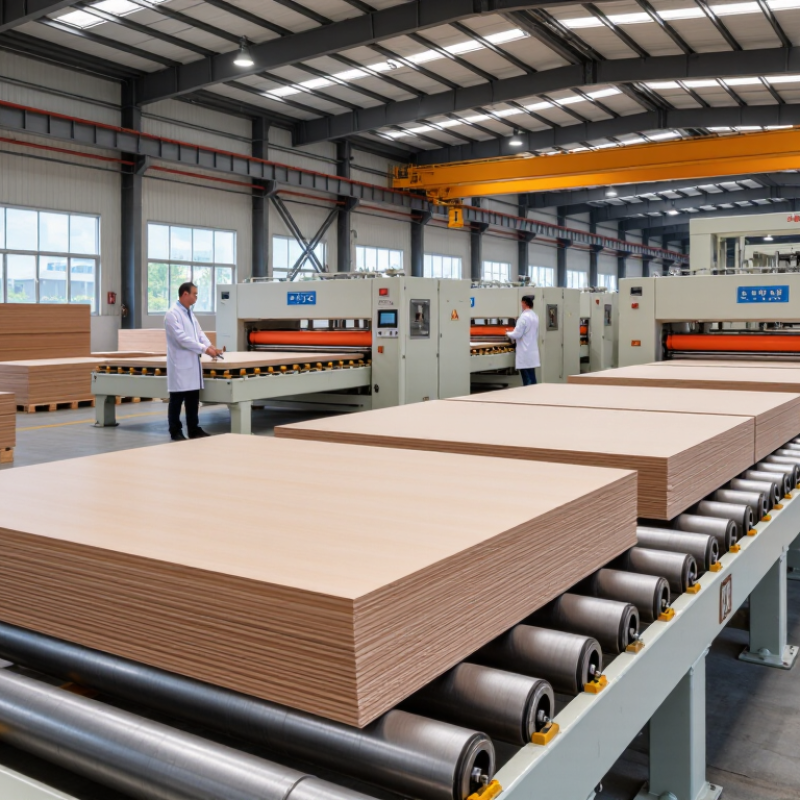
In China’s construction industry, structural plywood is more than a flat wood panel. It is an engineered component used in floors, roofs, walls, formwork, and temporary structures. Its strength comes from layered veneers, controlled grain direction, and adhesive bonding. The best panel is not always the thickest one. It must match the project load, moisture exposure, span, and installation method.
On a practical construction site, workers check panel thickness, edge condition, surface gaps, and warping before installation. A reliable supplier should provide test reports, production details, moisture information, and compliance documents for the intended application. Chinese projects may follow national standards, local requirements, and specific design documents. These details matter. A panel suitable for interior framing may fail in a humid exterior environment.
Moisture resistance deserves close attention. A panel can look smooth yet lose stability after repeated wetting and drying. I have seen purchasing decisions focus too heavily on price, while transport damage and storage conditions were ignored. That is a common weakness. Panels should stay level, covered, and raised from the ground. Buyers should also request samples and verify performance through independent testing when the project carries significant structural risk. Small defects can become visible movement, loose fasteners, or uneven surfaces after installation.
What Is the Best Structural Plywood in China?
Chinese structural plywood quality is not defined by one universal document. GB/T 9846-2015, the national plywood standard, sets requirements for classification, dimensions, appearance, and bonding performance. It is a useful starting point, but it does not replace project-specific engineering review.
Testing should follow GB/T 17657-2013, which covers physical and chemical performance of wood-based panels. Important checks include moisture content, bonding strength, formaldehyde emission, thickness tolerance, and static bending strength. In a warehouse inspection, I would examine edge gaps, veneer overlaps, repaired areas, and warped corners. Small defects often become visible after cutting.
For load-bearing applications, GB 50005-2017 provides timber structure design requirements. GB 50206-2012 addresses construction quality acceptance for timber structures. These standards help engineers connect panel performance with actual structural use. Yet, the documents do not automatically prove that every sheet is suitable for beams, floors, or wall bracing. That assumption is risky.
Ask for batch test reports, production dates, panel thickness, veneer species, adhesive information, and test conditions. Compare the report with the delivered sheets. Do not rely on appearance alone. A smooth surface can hide weak bonding. I would also confirm whether the selected grade matches humidity, span, fasteners, and expected loads. The standards are dependable references, but interpretation still requires qualified technical judgment.
Chinese plywood quality is evaluated through product conformity, structural performance, durability, and formaldehyde emissions. The chart compares the formaldehyde emission limits defined by GB/T 39600-2021. Lower values indicate lower formaldehyde emissions.
For structural plywood, GB/T 9846 defines general plywood product requirements, while GB/T 17657 provides test methods for wood-based panel properties. GB 18580 establishes mandatory formaldehyde emission requirements for indoor-use wood-based panels. A suitable structural plywood should meet the applicable product standard and be verified for strength, bonding quality, dimensional stability, and formaldehyde performance—not selected by emission class alone.
What Is the Best Structural Plywood in China?
Structural plywood types differ sharply in strength, stiffness, and moisture resistance. The USDA Forest Products Laboratory’s Wood Handbook reports typical plywood bending strength of roughly 20–60 MPa, with density often ranging from 400–700 kg/m³. These figures vary by wood species, veneer direction, thickness, and manufacturing quality.
Material selection matters.
For load-bearing floors and roof panels, graded softwood plywood usually offers balanced stiffness and weight. Hardwood plywood can provide higher surface hardness, but its core quality may differ between suppliers. According to APA PS 1 requirements, structural panels must control veneer defects, bonding performance, and thickness tolerances. However, a compliant panel is not automatically the strongest option for every project.
Durability depends heavily on exposure. EN 636 classifies plywood for dry, humid, or exterior conditions, while EN 12369-1 provides characteristic design values for structural use. Exterior-rated panels use more durable adhesive systems and better veneer construction. Still, exposed edges can absorb water quickly. A cut edge left beside a wet concrete slab may swell before the face looks damaged.
Factory testing should include bending strength, modulus of elasticity, shear strength, and thickness swelling. Test reports should identify the standard, specimen direction, moisture condition, and failure mode. Some Chinese plywood may show excellent laboratory results but inconsistent core gaps in production. That weakness is easy to miss. Buyers should request recent third-party reports and inspect several panels, not only one sample.
A reliable Chinese structural plywood manufacturer proves performance before discussing price. FAO’s Global Forest Products Facts and Figures 2022 places global wood-based panel production near 400 million cubic metres. China remains a major plywood production centre. Scale alone, however, does not guarantee stability. A dependable factory controls veneer thickness, core gaps, moisture, and bonding pressure. It should provide batch records and laboratory results. Look for testing against applicable standards, such as GB/T 17657, EN 636, or PS 1, depending on the project. The correct standard matters more than a polished catalogue.
In factory audits, consistency is visible on the production floor. Veneers should feel evenly dried, not brittle or clammy. Panels should show clean edges and limited delamination after testing. A reliable supplier also measures formaldehyde emissions and maintains calibrated equipment. The Forest Stewardship Council’s 2023 market data highlights continued demand for traceable, responsibly sourced wood products. Ask for legal sourcing documents and a clear chain of custody. Be cautious when certificates have no issuing body, test date, or product scope. Some suppliers are excellent at samples but weaker during bulk production. That gap deserves attention.
Tips: Request three recent batch reports. Check moisture content independently. Inspect the factory, not only the showroom. Ask how rejected panels are recorded. No process is flawless. Reliability means finding problems early and correcting them openly.
Choosing the best structural plywood in China starts with your project’s real demands. Define the load, span, exposure, and installation method before comparing prices. A roof panel needs different performance from interior formwork. Measure twice.
Check the plywood’s structural grade, thickness, veneer quality, and bonding performance. Look for clear technical data, batch traceability, and test reports from qualified laboratories. Relevant Chinese standards and project specifications should guide your selection.
Moisture resistance matters in kitchens, bathrooms, exterior walls, and temporary construction areas. For damp locations, select panels designed for repeated humidity, not ordinary interior plywood. Inspect the edges closely. Gaps, open joints, and uneven layers can signal weak manufacturing control.
A reliable supplier should explain core materials, adhesive type, formaldehyde-emission class, and storage requirements. Ask how the sheets are dried, pressed, and protected during transport. Flat surfaces and consistent thickness make cutting and assembly easier.
However, appearance alone proves little. A smooth face may hide internal voids. One common mistake is choosing the cheapest sheet for a load-bearing application. The short-term saving can create waste, movement, or rework later.
I would also avoid selecting purely by test values; site handling, fasteners, and moisture exposure can change performance. Review the installation details with a qualified engineer when safety is critical.
No plywood is perfect. The best choice is the one whose verified properties match the project, not merely the one with the finest surface.
Strength depends on wood species, veneer direction, panel thickness, and manufacturing quality. Typical bending strength can vary widely. Check the test details.
Graded softwood plywood often balances stiffness and weight for floor and roof panels. The right choice still depends on span and load.
Not necessarily. Its surface may resist dents better, but core quality can vary between suppliers. Look beyond the face veneer.
Match the panel’s exposure rating to the site conditions. Exterior-rated panels use suitable bonding systems, but cut edges can still absorb water quickly.
Look for bending strength, stiffness, shear strength, and thickness-swelling results. Reports should identify the test standard, panel direction, moisture condition, and failure mode.
Review recent batch records and inspect several panels. Look for clean edges, even veneers, and limited gaps or delamination.
Check that reports show a test date, issuing body, and product scope. Ask for traceable sourcing records and measured emissions data.
No. A good sample may not represent bulk production. Request reports from several recent batches and inspect panels from more than one batch. Mistakes can still happen.
Choosing the best Structural Plywood in China requires more than comparing price or appearance. In the construction industry, structural plywood is selected for its load-bearing performance, dimensional stability, moisture resistance, and ability to maintain strength under demanding conditions. Chinese standards help define essential requirements, including panel bonding quality, formaldehyde emissions, thickness tolerance, mechanical strength, and durability. Understanding these standards allows buyers to evaluate whether a product is suitable for buildings, flooring, roofing, concrete formwork, or other structural applications.
Different plywood types offer varying levels of strength, weather resistance, and service life depending on their wood species, veneer arrangement, adhesive system, and manufacturing process. A reliable Chinese manufacturer should provide consistent quality, clear technical specifications, professional production control, and complete testing documentation. When selecting the right product, consider the project’s load requirements, indoor or outdoor environment, expected service life, surface finish, panel dimensions, and budget. The best choice is the plywood that balances verified performance, safety, durability, and practical installation needs.

Quality