2026 Top Oak Veneer Plywood Suppliers for Global Buyers?

Time:2026-10-11 Author:Charlotte
0%

The 2026 search for reliable Oak Veneer Plywood suppliers begins with evidence, not attractive photographs. Global buyers need stable oak quality, accurate core construction, documented sourcing, and repeatable export performance. Product appearance matters, but internal bonding matters more when panels face humidity, machining, and long-distance transport.

The FAO Global Forest Products Facts and Figures 2023 reports global wood-based panel production at approximately 393 million cubic metres. This scale shows a mature industry, yet it does not identify dependable oak veneer specialists. The UNECE/FAO Forest Products Annual Market Review also highlights changing construction demand, trade flows, and pressure on forest-product supply chains. These trends make supplier verification essential for 2026 purchasing decisions.

A credible supplier should provide veneer thickness tolerances, core species, formaldehyde-emission results, moisture data, and production photographs. Ask for recent test reports, not old certificates. FSC or PEFC documentation can support responsible sourcing, but buyers should verify certificate scope and validity independently. EN 314 bonding results, EN 13986 documentation, or relevant ASTM testing may also clarify performance for furniture, cabinetry, wall panels, and interior fit-outs.

Small details reveal experience. Does the veneer show matched cathedral grain? Are panel edges clean after cutting? Can the factory explain repair patches, sanding allowances, and packing methods? These answers often matter more than a polished catalogue.

No supplier list is perfect. Oak appearance varies naturally, and shipment conditions can expose weak quality control. This guide therefore compares suppliers through technical capability, certification transparency, export experience, customization, and buyer feedback. The goal is practical confidence, not an uncritical ranking.
2026 Top Oak Veneer Plywood Suppliers for Global Buyers?

What Is Oak Veneer Plywood and Why Does Supplier Selection Matter?

Oak veneer plywood combines a thin oak surface with layered wood veneers beneath it. The cross-laminated structure improves dimensional stability, while the oak face provides a warm, natural appearance. USDA Forest Products Laboratory’s Wood Handbook (2021) identifies veneer quality, grain direction, adhesive bonding, and moisture control as key performance factors.

The market is substantial. FAO’s Global Forest Products Facts and Figures 2022 recorded roughly 370 million cubic metres of global wood-based panel production. That scale creates choices, but also inconsistency. A supplier may offer beautiful oak faces while using weak cores, uneven thickness, or unsuitable adhesives. I have seen attractive samples hide poor internal construction. A perfect sample proves little.

Supplier selection therefore requires evidence, not polished photographs. Global buyers should request core specifications, veneer thickness, formaldehyde test results, moisture ranges, and production tolerances. Independent laboratory reports add confidence. So does batch traceability. The UNECE/FAO Forest Products Annual Market Review 2023–2024 also shows that forest-product markets remain sensitive to construction demand and trade changes. Reliable suppliers explain these risks clearly. They should also provide export packaging details, inspection procedures, and documentation for responsible timber sourcing. Certification helps, but it does not replace product testing. That distinction is easy to miss.

How to Evaluate Oak Veneer Plywood Quality and Product Specifications

How to Evaluate Oak Veneer Plywood Quality and Product Specifications

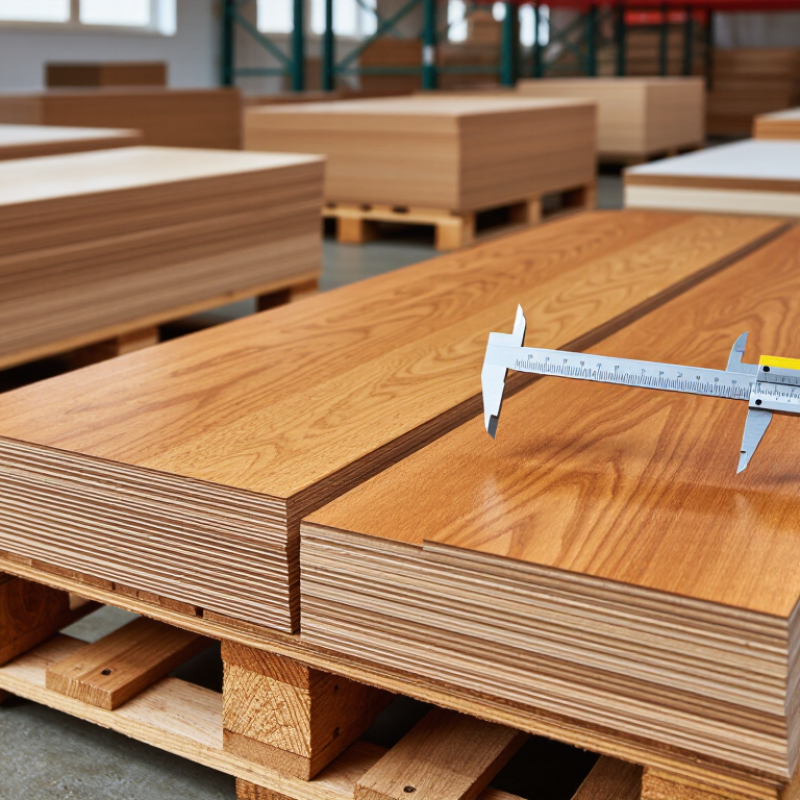
A reliable oak veneer plywood inspection begins with the core, not the attractive surface. Check the panel edges for gaps, overlapping plies, voids, and uneven glue lines. A 2.5-metre straightedge can reveal warping that casual handling misses. Measure thickness at several points with a calibrated caliper. A 12-millimetre panel should not vary noticeably across its surface. Small differences can affect cabinet joints and CNC settings.

The USDA Forest Products Laboratory’s Wood Handbook reports that indoor wood moisture commonly stabilizes around 6–14%, depending on climate and building conditions. Ask suppliers for moisture records from the actual production batch. Confirm veneer thickness, face grade, back grade, core species, formaldehyde class, and bonding performance. For humid applications, request test evidence aligned with EN 314-2 or an equivalent standard. FAO’s Global Forest Resources Assessment 2020 estimates that forests cover about 31% of global land area. Traceable timber documentation therefore matters, not just appearance. A beautiful oak face may still conceal weak poplar cores or poorly balanced construction.

Tips: Request a recent test report. Inspect five random panels. Test edges after machining. Compare grain direction under daylight. Ask whether specifications describe minimum or average values. Do not trust photographs alone. One practical weakness remains: supplier documents may represent selected samples, not every shipment. Independent pre-shipment inspection costs more, but it can expose delamination, moisture imbalance, or veneer repairs before loading.

Which Regions and Manufacturers Lead the Global Oak Veneer Plywood Market?

2026 Top Oak Veneer Plywood Suppliers for Global Buyers?

North America and Europe remain important regions for oak veneer plywood production. Their manufacturers often provide stable grading, precise thickness, and strong documentation. European suppliers commonly serve furniture, doors, and interior wall projects. North American producers focus on durable panels and consistent oak appearance. However, neither region leads every category. Availability can change with harvest conditions, energy costs, and shipping capacity.

East Asia has become a strong manufacturing center for export-oriented plywood. Producers in China and Southeast Asia offer flexible specifications, large-volume capacity, and competitive conversion costs. Some factories also provide custom face grades, backing options, and moisture-resistant constructions. Buyers should not judge quality by region alone. Factory audits, veneer thickness checks, and glue-bond testing remain essential. I have found that attractive samples can hide uneven cores. That mistake is expensive.

Tips: Request production samples from different batches. Check oak grain, repairs, sanding marks, and panel flatness under natural light. Ask for test reports covering formaldehyde emissions, bonding strength, and moisture performance. Confirm whether the stated thickness is nominal or actual. Also review packaging details, pallet protection, and replacement procedures. Small omissions matter. A reliable supplier should answer clearly, provide traceable documents, and admit technical limitations.

How to Compare Pricing, Certifications, Capacity, and Export Services

A reliable oak veneer plywood supplier should be compared beyond the quoted sheet price. Ask for pricing by thickness, core construction, veneer grade, glue class, and packaging method. Confirm whether the quote is EXW, FOB, or CIF. A low price can hide higher moisture variation, thinner face veneer, or costly port handling. Request recent samples and inspect color matching, edge bonding, surface repairs, and flatness under normal warehouse lighting.

Certification checks require more than viewing a logo on a PDF. Verify certificate numbers, issuing bodies, validity dates, and product scope. Depending on the destination, buyers may need responsible-wood documentation, formaldehyde-emission testing, or specific customs papers. Test reports should match the actual panel structure. One overlooked detail can delay clearance.

Capacity also needs practical evidence. Ask for monthly output, current order load, standard lead time, and backup production arrangements. A supplier claiming high capacity should explain how it manages veneer drying, grading, pressing, and final inspection. Export services matter too. Check pallet strength, moisture protection, container loading photos, fumigation documents where required, and responses during shipping disruptions. I have learned that fast replies do not always mean reliable execution. A written quality agreement, pre-shipment inspection, and clear claim process create stronger protection. Still, inspections can miss problems hidden inside a full container. That risk deserves honest discussion.

What Should Global Buyers Check Before Placing a Supplier Order?

Global buyers should verify the material before discussing price. Ask for the oak species, veneer thickness, plywood core, grade, and panel dimensions. A sample should show consistent grain, clean joins, stable layers, and limited color variation. Do not judge quality from photographs alone.

Request recent test reports for moisture content, bonding strength, formaldehyde emissions, and dimensional stability. Confirm whether the reports match the actual production site and product specification.

Check the supplier’s quality system, production capacity, inspection records, and experience with export packaging. Small details matter. Poor corner protection can damage otherwise good panels during a long sea journey.

Ask for clear tolerances, minimum order quantities, lead times, payment terms, and shipping responsibilities in writing. Confirm pallet measurements, container loading plans, labels, packing lists, and required origin documents before placing the order.

A pre-shipment inspection can compare random panels against the approved sample. I have found that buyers often inspect appearance but overlook moisture readings and core gaps. That mistake can become expensive after installation.

No checklist is perfect. Leave room for an independent inspection, especially when the supplier is new or the order is large. Reliable suppliers should answer technical questions directly and explain any limitation without hiding behind general sales language.

FAQS

What details should buyers compare in a plywood price quote?

Compare thickness, core construction, veneer grade, glue class, and packaging method. Confirm whether the quote is EXW, FOB, or CIF. A low price may hide thin face veneer or expensive port handling. Ask for every cost in writing.

How can buyers inspect oak veneer plywood samples?

Request recent samples from normal production. Check grain matching, edge bonding, surface repairs, and flatness under warehouse lighting. Look closely at corners and panel edges. Photos are not enough.

Which certifications and documents require verification?

Check certificate numbers, issuing organizations, validity dates, and product scope. Confirm that test reports match the actual panel structure and production site. Depending on the destination, buyers may need wood-source documents, emission tests, or customs papers. One wrong detail can delay clearance.

What should buyers ask about factory capacity?

Request monthly output, current order load, normal lead time, and backup production plans. Ask how the factory manages drying, grading, pressing, and final inspection. A large capacity claim needs practical evidence. Numbers alone can mislead.

How should buyers evaluate export packaging and shipping support?

Check pallet strength, corner protection, moisture barriers, labels, and container loading photos. Confirm packing lists and required origin documents before production. Ask how the supplier handles shipping disruptions. Small gaps matter.

What technical information should be written into the order?

Record panel dimensions, tolerances, veneer thickness, moisture range, core quality, and approved sample details. Include minimum quantities, lead times, payment terms, and shipping responsibilities. Clear wording reduces arguments later. I used to trust verbal promises too much.

Is pre-shipment inspection enough to protect a large order?

It can compare random panels with the approved sample. Inspectors should check appearance, moisture readings, flatness, bonding, and core gaps. However, hidden defects may remain inside a full container. That risk deserves honest discussion.

What signs suggest a supplier may be unreliable?

Watch for vague answers, missing reports, unexplained delays, and changing specifications. Fast replies do not always mean reliable execution. A supplier should explain limitations clearly. I still find this difficult to judge from one successful shipment.

When is independent inspection especially useful?

Consider it when the supplier is new, the order is large, or the product is technically demanding. Independent checks can review random panels before loading. They cannot remove every risk. Keep a clear claim process anyway.

Conclusion

Oak Veneer Plywood is a practical engineered wood product valued for its natural oak appearance, structural stability, and flexibility in furniture, cabinetry, interior panels, and architectural applications. For global buyers, choosing the right supplier matters because product consistency, core construction, veneer quality, moisture resistance, and production reliability can directly affect project performance and long-term costs. Buyers should review veneer grade, thickness tolerance, formaldehyde emissions, bonding performance, surface finish, and available customization options before making comparisons.

Leading suppliers may be located in regions with strong forestry resources, established panel manufacturing capabilities, and efficient export networks. A thorough comparison should include pricing, minimum order quantities, production capacity, lead times, certifications, packaging standards, and international shipping support. Before placing an order, buyers should request technical data, product samples, inspection procedures, certificates, and clear contract terms covering specifications, payment, delivery, and claims. Careful supplier evaluation helps reduce quality risks and supports stable, compliant, and cost-effective international procurement.


Charlotte

Charlotte

Charlotte is a seasoned marketing professional with a deep understanding of the company's portfolio and a passion for elevating its presence in the market. With a keen eye for detail and a commitment to excellence, she ensures that our professional blog is regularly updated with insightful articles......